Dear video game enthusiasts and advocates of ethical crowdfunding,
The case of the Megadrive game Paprium, created by WaterMelon Games and led by Gwénaël Godde, also known as Fonzie, presents several issues that are becoming concerning: production delays and delivery problems seem to have left many contributors dissatisfied and unreimbursed to date.
The development of Paprium has been marked by considerable delays since its announcement in 2012, and the game was only released in 2020, in limited quantities. It has now become very rare and sells for an average of €900 on eBay.
WaterMelon has encountered significant financial difficulties, including a rumored (but never proven) freezing of PayPal accounts, which complicated the management of the crowdfunding campaign funds and exacerbated delays and dissatisfaction.
To date, many customers are still waiting for their orders or a refund. The website where they placed their orders has simply closed, while the company itself still exists.
In response to financial difficulties and criticism, WaterMelon Games initially announced it would sell its most valuable assets and intellectual properties in the hope of maintaining operational stability. Then, the company launched a new crowdfunding campaign via the Kickstarter platform.

This new funding attempt aims to bring Paprium to PlayStation 4, PlayStation 5, Switch, and Steam, thus trying to give new life to this game originally designed for the Sega Genesis.
This campaign was scheduled to run from October 21, 2021, to December 20, 2021.
3271 backers invested 895,569 euros.
While the delivery of the promised products was scheduled for December 20, 2022, there has been no response to date.
Many questions surrounding the situation with WaterMelon Games and the game Paprium suggest the possibility of a « Ponzi scheme » or « pyramid scheme » operation. In such a model, the income generated from new investors is used to fulfill obligations to previous investors, without any real generation of profits or delivery of products.
May 2024, the blaze of French-speaking YouTube.
In August 2020, a highly detailed video by the channel Life is a Video Game highlighted disturbing revelations about Watermelon’s management of the Paprium project. The game’s release some time later helped to reduce the controversy sparked by these revelations.
However, over the years, delayed deliveries and unfulfilled orders have reignited discussions, and gradually, tempers are flaring up again
A few days later, another channel, Paravec’s channel, pulls a prank by filming themselves in a warehouse filled with boxes of Paprium games, leading the public to believe that a hidden stock has finally been discovered.
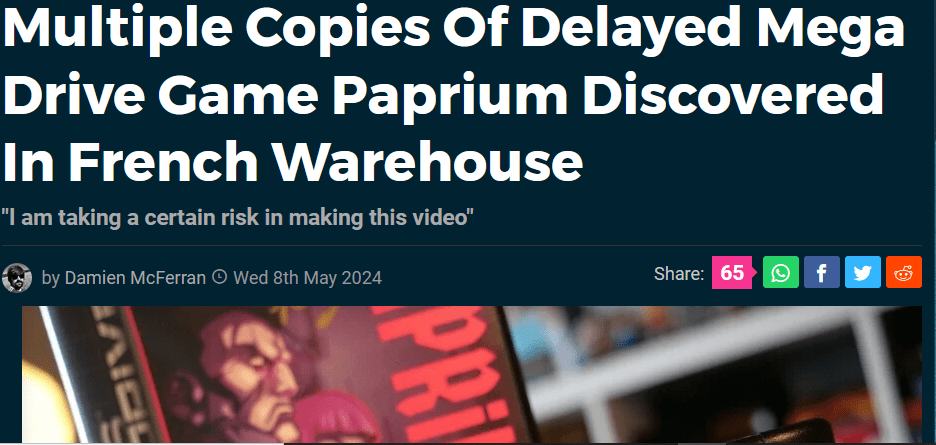
This video ignites the powder keg by rekindling the anger of empty-handed buyers and leads to worldwide dissemination
In response, the designer of Kirito The Game, a highly anticipated Megadrive game, Cyber808, announces on his channel the preparation of a collective action by the buyers and funders, for whom it is too much.

Tempers flare and the peak of discontent is embodied in the striking phrase of a persona in the French YouTube gaming community, Deep Flake, who has been waiting for his €250 Grand Stick for nearly five years:
« ‘Fonzie, I’ll go get my Grand Stick even from your toilet.’ »
In light of what can be perceived as serious negligence or deliberate deception, a response seems necessary.
It is an independent agency of the United States government, established in 1914. Its primary mission is to protect consumers and promote competition by preventing anticompetitive, deceptive, or fraudulent business practices. Due to the international scope of commerce and the cross-border impact of business practices, the FTC can also play a crucial role in cases involving non-American consumers, especially when U.S.-based companies like Kickstarter are involved.
On several occasions, for amounts much smaller than those in the Paprium case, convictions have been made. For example
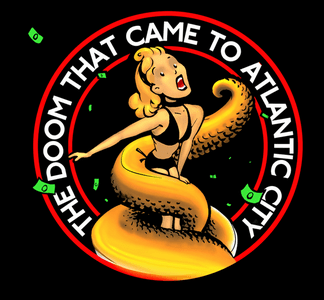
The case of the board game « The Doom That Came to Atlantic City »: In 2013, a creator named Erik Chevalier raised over $122,000 to develop this board game. However, he used a large portion of the funds for personal purposes. The Federal Trade Commission (FTC) opened an investigation that led to a settlement in 2015, where Chevalier was required to refund the backers.
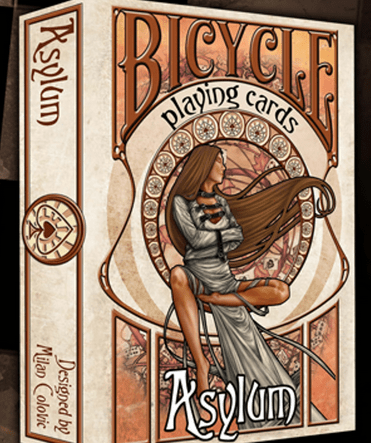
Asylum Playing Cards » project: Another example involves a Kickstarter project for a card game called « Asylum. » In 2012, after raising about $25,000, the creator failed to deliver the promised rewards. Following numerous complaints, the FTC also investigated this case, resulting in a settlement to ensure the backers were refunded
The jurisdiction of the FTC extends worldwide, meaning that an individual or a collective outside the USA can file a complaint with the Commission once their case is prepared.
Since these two precedent-setting cases, the number of complaints has increased as fraud has progressed. Initially hesitant, the FTC is now experienced, and convictions are becoming more frequent.
Indeed, as of March 2024, the FTC estimates that 18% of projects on Kickstarter involve misappropriation and fraud.
New regulations are already in the pipeline, and the pressure on Kickstarter is increasing. Well-versed in these types of cases, the FTC can intervene in the Paprium case without difficulty, having full territorial jurisdiction due to WaterMelon’s domicile in the United States, as well as Kickstarter’s domicile in Brooklyn.
In France, Criminal Action for Breach of Trust and/or Fraud
In France, breach of trust, defined by Article 314-1 of the Penal Code, is the act of a person misappropriating funds, securities, or any property that has been handed over to them, which they have accepted on the condition of returning, representing, or using it in a specific way, to the detriment of another.
By collecting funds with no possible traceability, which were intended for the production of manufactured products that are not delivered, the fundraiser may meet the conditions for constituting such an offense.
Similarly, by creating a website ex nihilo to receive orders for products upon the release of Paprium in 2020, and closing it shortly thereafter without delivering the items, the author of this process can also be prosecuted for the same reasons.
If it turns out that the website in question was a fraudulent bait to receive a large number of orders but deliver only a few, the scheme may constitute fraud as defined by Article 313-1 of the Penal Code.
According to the terms of this article, fraud is the act of deceiving a natural or legal person, either by using a false name or a false status, or by abusing a true status, or by employing fraudulent maneuvers, thereby causing them to hand over funds, securities, or any property, to provide a service, or to consent to an act that creates an obligation or discharge to their detriment or that of a third party.
In terms of online sales, numerous convictions have already occurred in France for e-commerce sites that operated in this manner.
These qualifications do not prejudge what may have actually happened, but the absence of consideration for customers who have sometimes paid over €1,500 for several products, combined with a lack of communication about their orders since 2020, suggests the importance of their interest.
The first action to consider is to identify the victims.
The law firm Bastardi-Daumont has agreed to intervene pro bono to handle the cases and initiate legal proceedings. Bringing together three lawyers, the firm’s founder has previously intervened in the retrogaming world to force Google to back down against a YouTuber whose channel had been deleted.
All contributors disappointed with the Paprium project (whether French or foreign) are invited to share their experiences with them. Here’s what needs to be provided to build a case and bring it to the appropriate courts:
• Name and surname
• Amount and date of the contribution
• Details of the communication with WaterMelon Games and/or its intermediaries
• Description of the experience
This data protected by the GDPR will only be transmitted through this lawyer’s email and is therefore covered by legal privilege. This information is to be sent to the following address:
In collaboration with the identified complainants, these testimonies will be collected and analyzed until September 2024. At this date, without any response from Watermelon, it will be proposed to gather and deploy them as a collective action, as already written above.
The ball will then be in the court of the investigating body, which will assess whether there is fraud in this case or not.
What is the WATERMELON leader doing? Why is he not responding? Where is he?

Fonzie is very secretive by nature and keeps his actions and communication private. Having spent some time in China, he has now returned to France. He has taken certain precautions to avoid being easily locatable, requesting to exercise Article 21 of the GDPR in the creation of his new business, so he is untraceable on Infogreffe or Pappers.
Nevertheless, he has made a few oversights that make this information publicly accessible.
Fonzie is currently in Moirans (38), where he runs a company called Janus Polytechnique. The contact details for this company are as follows:
JANUS POLYTECHNIQUE
38430 CENTR’ALP
FRANCE
+33(0)6 Ƽ2 46 13 30
He recently filed the name of a new game, « American Mega Brawl » (possibly the one called « of the Dolphin »).
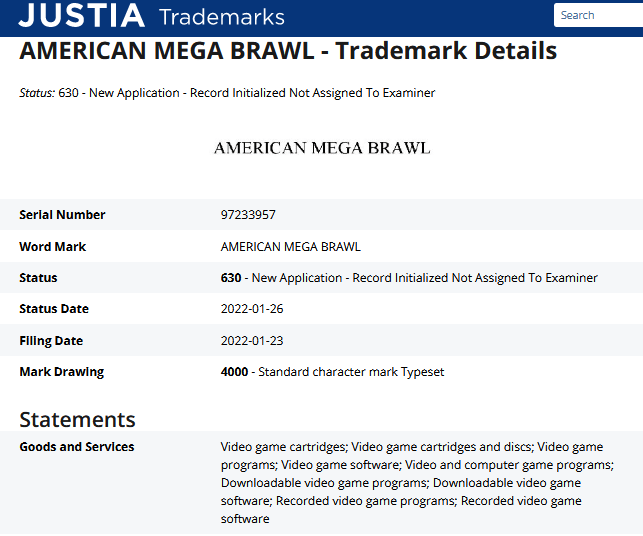
Since December 2023, he has stopped providing updates on the projects for which crowdfunders have invested over €895,569 to receive items that were supposed to be delivered in 2022.
A helping hand to WATERMELON.
Considering these elements, we hope that this initiative will lead to a « wake-up call » for Fonzie, and we invite WaterMelon Games to contact us through our counsel before September 2024 to discuss the current situation. If he does not wish to do so, he is advised to resume work and fulfill his commitments to those who have placed their trust in him.
Our goal is to understand all aspects of this matter to reach a fair and balanced conclusion, ensuring that customers are respected, meaning they should be refunded or served.
We also wish to contribute to the ongoing fight in the United States to reduce fraud and restore more ethical crowdfunding.
 Paprium case